Foot care
Good foot care is essential during a long hike. Here you will find tips and information to prevent blisters and keep your feet in good condition.
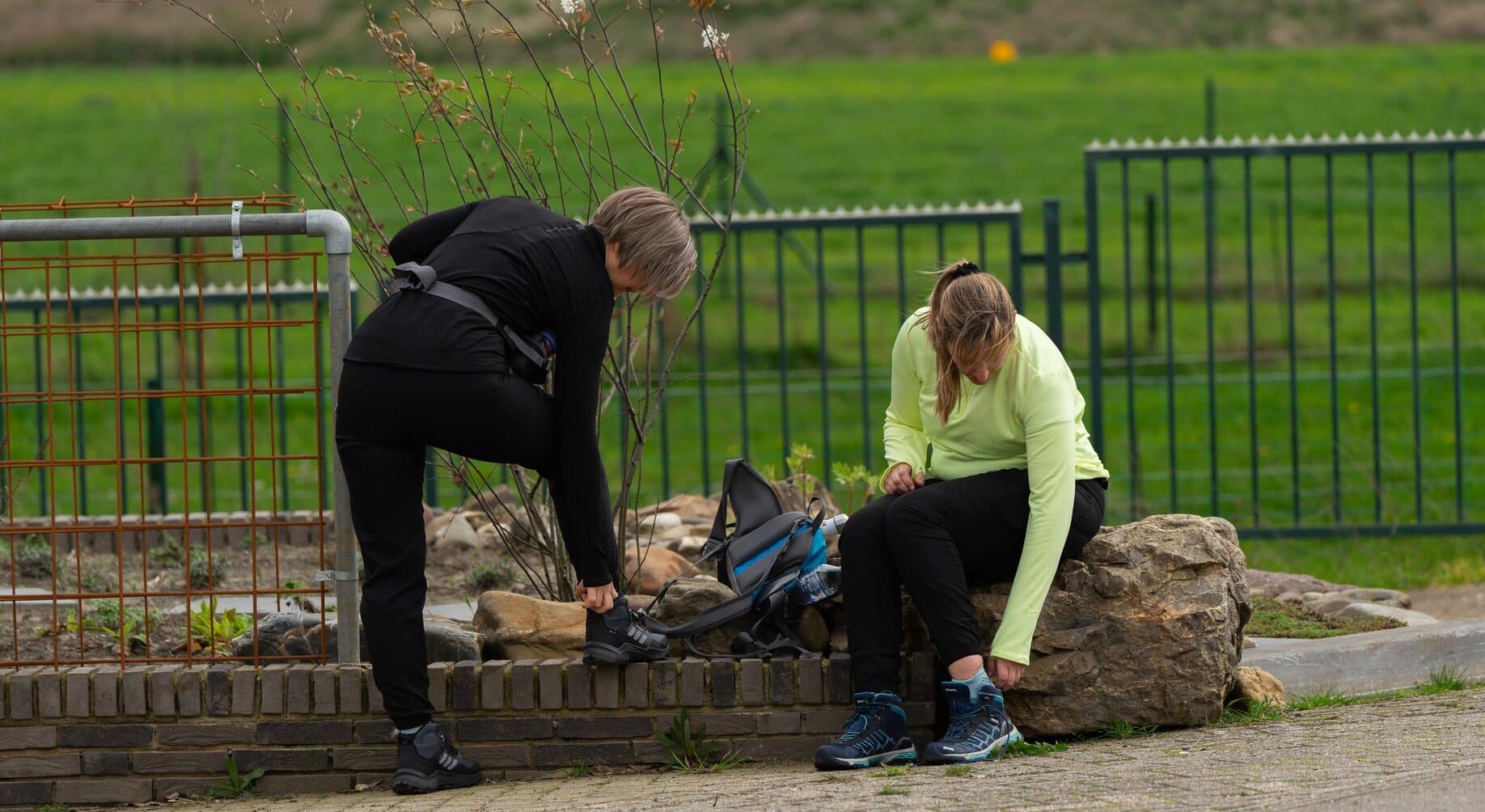
Blisters
Blisters are a common problem when hiking. Blisters indicate where the skin is not yet strong enough. Most blisters can be lanced. Click here for instructions from the Red Cross.
Sometimes you feel blisters coming on, but you can’t treat them yet. In that case, wait until a few hours after the hike.
If you get a blood blister, you should leave it alone and have it treated by a certified first aider.
Much worse than blisters are raw, damaged feet. This involves actual wounds. You must try to prevent this! It is painful and makes walking very difficult or even impossible. Therefore, also prevent blisters from tearing open, because then you essentially have a wound as well.
More information about aftercare for blisters after treatment by the Red Cross can be found here.
Hardening your feet
You can harden the skin of your feet by taking a cold foot bath for a few minutes every day. Rubbing them with camphorated spirit also helps. Of course, you have to keep this up for several weeks.
Another effective remedy against blistering is applying a special vaseline or skin lube to the foot, available at the drugstore. This prevents friction and thus blistering. Grease the toes, heel, and other vulnerable areas well, and check them during a break, applying new skin lube if necessary.
Walking pace and resting
Walk at your own pace and don’t start too fast. Don’t force yourself and don’t take extra large steps to keep pace with someone else. But do keep moving and don’t dawdle. Don’t rest too much. A fifteen-minute rest every two hours should be sufficient, with a slightly longer rest halfway through if needed. However, resting remains an individual matter. If you rest for too long, you’ll get cold and your muscles will stiffen. Putting your feet up for a few minutes is good. But don’t sit on the cold ground. If you’re completely exhausted, an hour of good rest and a substantial snack can sometimes be the solution.
Taping
Some people swear by pre-taping the heel, toes, or the entire foot with plasters in a layered fashion. You are essentially creating an extra layer over the skin. If you have no experience with taping, it’s best to have it done by experts to prevent blood circulation from being disrupted. Disrupted blood circulation is recognizable by blue feet and is very dangerous.
For a fee and by appointment, you can have your feet taped by the Red Cross on the day before the march at the Red Cross building on Hemelsley. Information regarding making an appointment can be found by clicking here.